
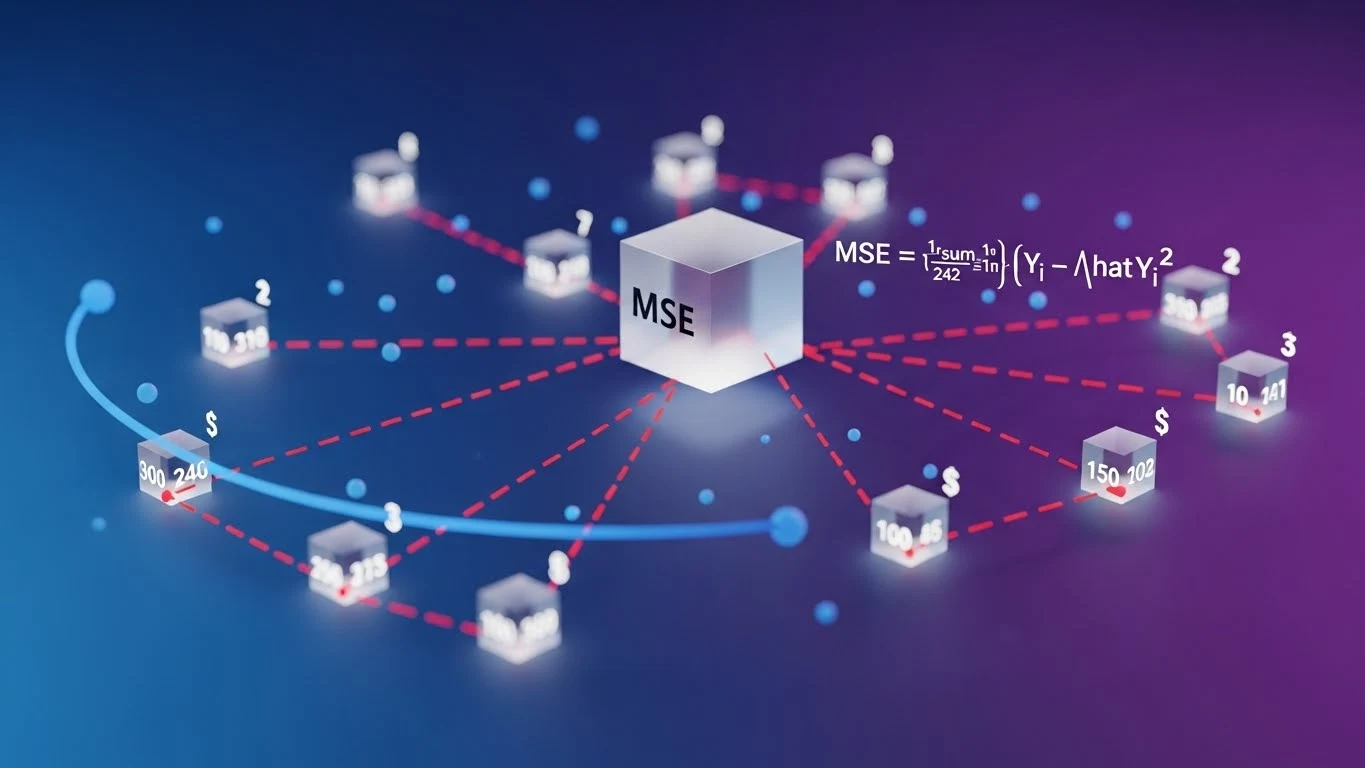
Mean Square Error (MSE) is a key concept in statistics and data analysis that has been trending recently as more people explore machine learning, predictive models, and data science.
Many learners, analysts, and beginners are searching for its meaning because understanding MSE is crucial for evaluating the accuracy of models and predictions.
Simply put, Mean Square Error measures the average of the squares of errors or differences between predicted and actual values.
⚡ Quick Answer
Mean Square Error (MSE) is a statistical measure that quantifies the average squared difference between predicted and actual values. It tells you how close a prediction or estimate is to the actual outcome.
📚 Core Content Sections
In Texting and Messaging
Although MSE is primarily a statistical term, some people might jokingly refer to MSE in texts to indicate a “mistake” or “oops moment” in casual conversation. For example:
- “I totally miscalculated that MSE 😅”
- Here, it humorously refers to making a small error in daily life.
In general, its usage in texting is rare and mostly context-dependent.
In Love and Relationships
In relationships, MSE might pop up metaphorically when discussing mistakes or misunderstandings:
- “Our last date was full of MSEs, but we learned from them 💕”
- It’s used to acknowledge errors in judgment or expectations while showing a willingness to improve.
Again, this is informal and symbolic rather than literal.
In Slang and Casual Language
While MSE does not have a widely recognized slang meaning, data-savvy groups might use it jokingly to describe errors in predictions about life or social interactions:
- “Predicted our weekend plans, but ended up with huge MSE 😂”
It’s a nerdy way to say, “my prediction failed.”
On Social Media Platforms
On platforms like TikTok, Instagram, or Snapchat, MSE may appear in educational posts or meme content:
- Educational posts: Explaining statistics, machine learning, or model evaluation.
- Memes: Comparing expectations vs. reality using “MSE” to indicate the error.
For example, a TikTok caption could be:
“My cooking skills vs. online recipe prediction = 100% MSE 😭”
Spiritual or Symbolic Meaning
MSE does not have a direct spiritual meaning, but metaphorically, it can symbolize learning from mistakes or understanding discrepancies between expectation and reality.
- Example: Reflecting on life errors and using them to improve decision-making.
Numerology or Cultural Meaning
MSE does not have a specific numerological or cultural significance. Its importance is strictly practical in mathematics, statistics, and analytics.
🧠 Examples & Usage
Here are some real-life examples of MSE usage:
| Context | Example | Meaning |
| Statistics | “The MSE of this model is 4.2, which shows our predictions are fairly accurate.” | Quantitative measure of prediction error |
| Texting | “Forgot to submit the report again, total MSE 😅” | Casual way to admit a mistake |
| Social Media | “Expectation vs Reality of my weekend = huge MSE 😂” | Humorous expression of prediction failure |
Context changes meaning: In data analysis, MSE is formal and numeric, whereas in casual contexts, it’s symbolic or humorous.
❓ Common Questions
What does Mean Square Error really mean?
It measures the average squared difference between what you predicted and what actually happened.
Is MSE positive or negative?
MSE is always non-negative because squaring differences eliminates negative signs.
Is MSE romantic?
No, it is not romantic. It is a statistical concept, though metaphorical references may appear in relationships.
How should someone reply to MSE in a casual text?
- “Haha, we all have MSE moments 😅”
- Or simply acknowledge the error: “Got it, let’s fix it!”
🏁 Conclusion
Mean Square Error (MSE) is a measure of how far predictions deviate from actual results.
While it is mainly used in statistics and data science, it can appear metaphorically or humorously in everyday language.
Understanding MSE helps you evaluate errors accurately and even adds a nerdy twist to casual conversations. Now, you can confidently recognize and use MSE in any context!
