In today’s fast-paced digital world, people often encounter the word “compare” across texts, social media, and casual conversations.
Whether in discussions about products, relationships, or social trends, understanding what “compare” truly means has become essential.
Many search for its meaning because it appears frequently in everyday communication, yet its interpretation can vary depending on context.
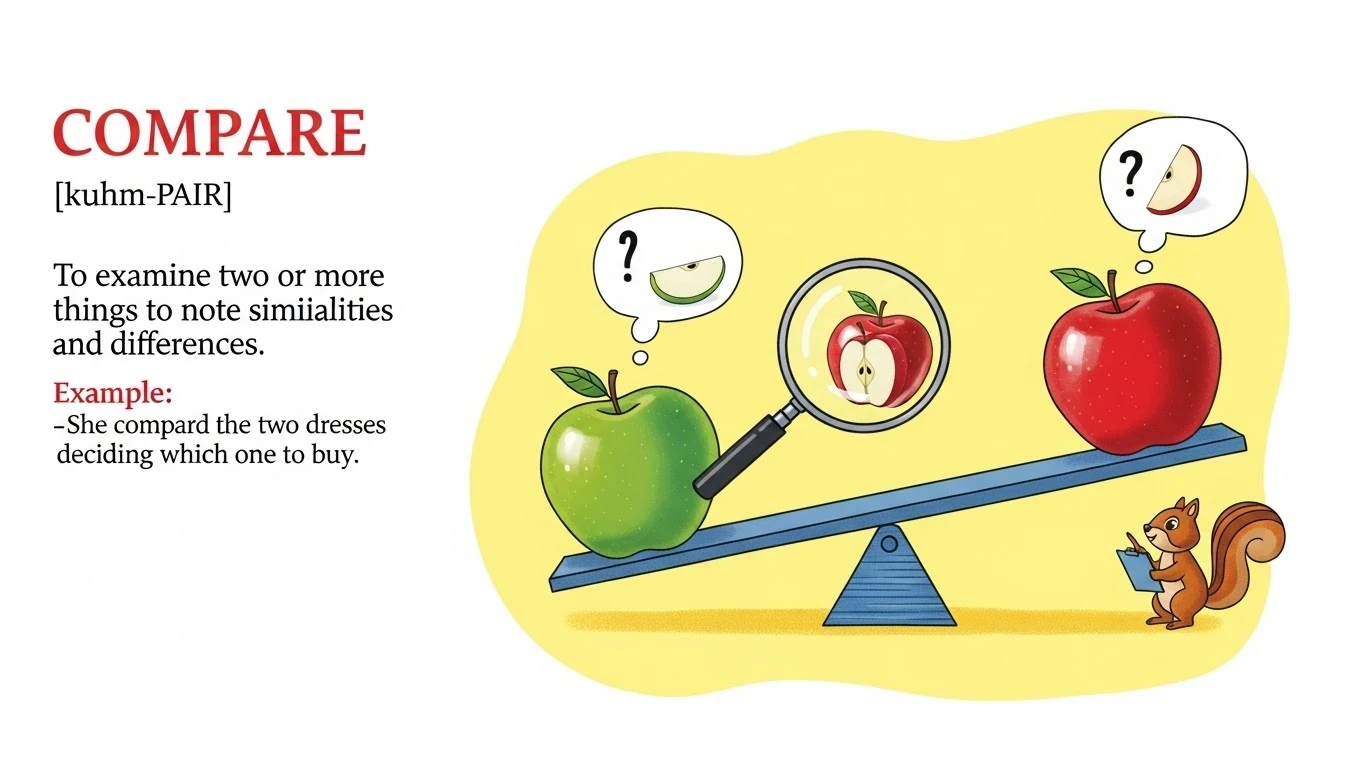
At its core, “compare” means to examine two or more things to identify similarities or differences. This simple definition, however, only scratches the surface of its versatile use in modern language.
⚡ Quick Answer
Compare simply means to look at two or more things and notice how they are alike or different. It can be used in formal contexts, casual speech, or online interactions to evaluate, judge, or even tease.
In Texting and Messaging
In texting, “compare” often comes up when someone wants to highlight differences or similarities between people, ideas, or experiences.
Example:
- “Don’t compare your weekend to mine; we all have different vibes.”
- “Can we compare notes for the exam?”
Here, the tone can be informative, casual, or even slightly competitive.
In Love and Relationships
In relationships, “compare” usually carries a sensitive or cautionary meaning. It may refer to comparing a partner to someone else, which can impact feelings.
Example:
- “I feel like you always compare me to your ex.”
- “Let’s not compare our first date to theirs—it was special in its own way.”
In this context, comparison can be negative if it causes jealousy or insecurity.
In Slang and Casual Language
Online and in casual speech, “compare” can take on a playful or humorous tone. People may use it to mock, exaggerate, or make light of differences.
Example:
- “You can’t compare my gaming skills to yours, lol.”
- “Stop comparing memes—they’re all funny in their own way.”
Here, the term is less formal and often expresses friendly banter.
On Social Media Platforms
On TikTok, Instagram, Snapchat, and other platforms, “compare” is widely used in trending posts, captions, and challenges. Users often compare:
- Lifestyle choices
- Outfits or fashion trends
- Travel destinations
- Daily routines
Example:
- Instagram Caption: “Can we stop comparing our mornings to everyone else’s perfect feed?”
- TikTok Trend: “Compare your childhood vs. now” challenges.
Social media comparison can be motivational or relatable, but it may also encourage unrealistic standards.
Spiritual or Symbolic Meaning
In spiritual contexts, “compare” symbolizes self-awareness and reflection. It’s about understanding your journey versus others’ paths.
Example:
- Meditation reflection: “I compare my growth today with who I was yesterday, not with anyone else.”
Here, comparison is positive, helping with personal growth rather than judgment.
Numerology or Cultural Meaning
While “compare” doesn’t have a direct numerology meaning, in cultural studies, comparison is often seen as a tool to learn, adapt, and improve. Many cultures emphasize not comparing oneself negatively to others, highlighting the value of individual uniqueness.
🧠 Examples & Usage
| Context | Example | Meaning |
| Texting | “Don’t compare your homework with mine.” | Evaluating differences in work or effort |
| Relationships | “Stop comparing me to your ex.” | Sensitive; can hurt feelings |
| Slang | “You can’t compare my shoes to hers.” | Casual, playful comparison |
| Social Media | “Compare your Monday to everyone’s highlight reel.” | Highlighting social media trends |
| Spiritual | “I compare my progress, not my success.” | Self-awareness and growth |
Context matters: The tone, setting, and relationship between people can change whether “compare” feels neutral, positive, or negative.
❓ Common Questions
What does compare really mean?
It means to examine two or more things to see similarities or differences.
Is compare positive or negative?
It depends on context. In learning or reflection, it’s positive. In relationships or self-image, it can feel negative.
Is compare romantic?
Usually not, but in relationships, comparing can affect emotions, either enhancing appreciation or causing insecurity.
How should someone reply to compare?
- If playful: respond with humor.
- If sensitive: reassure or set boundaries.
- If reflective: consider the comparison as feedback for self-growth.
🏁 Conclusion
In simple terms, “compare” is about noticing similarities and differences.
Its meaning changes depending on context from casual texting and social media trends to sensitive relationships and personal reflection.
Now, whenever you encounter the term, you can understand its nuance and respond appropriately.
