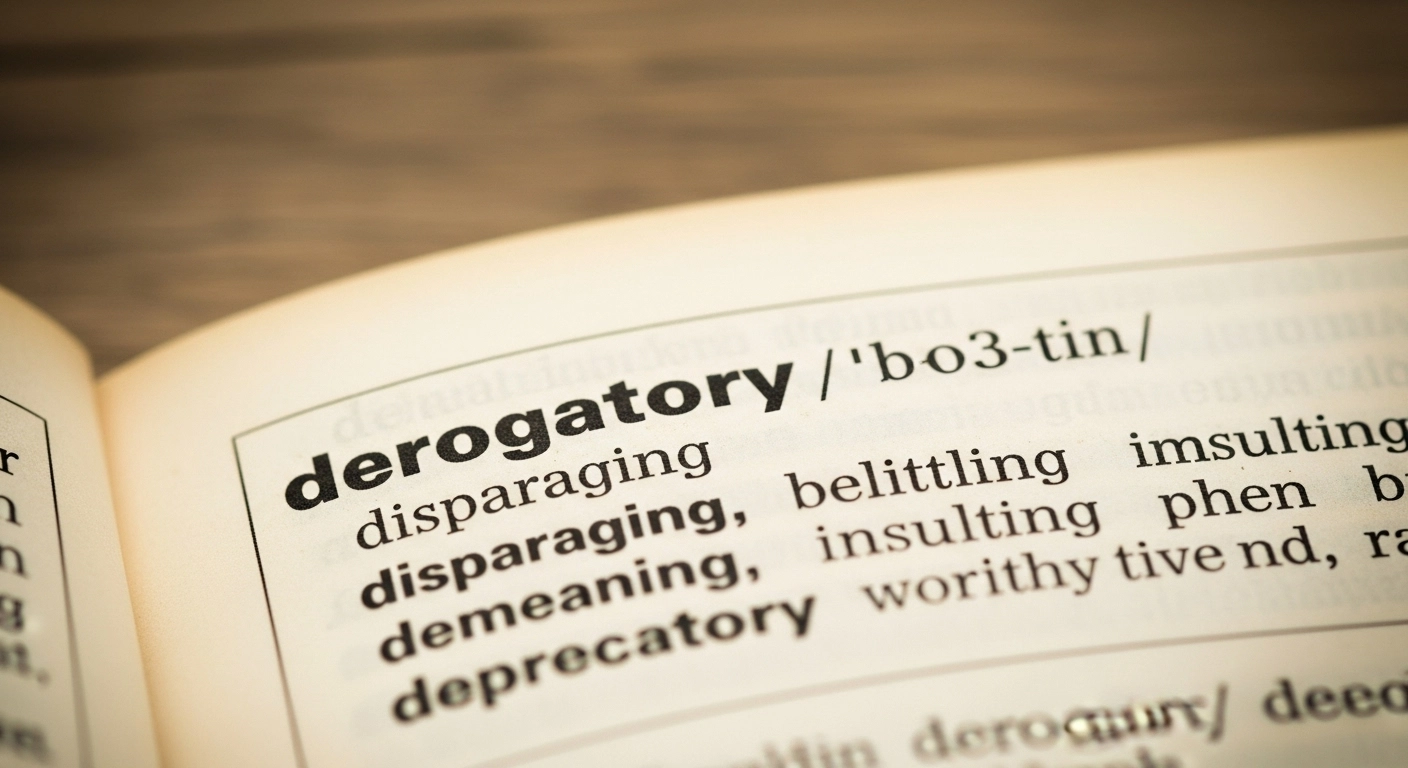
Lately, the term “derogatory” has been popping up in conversations, texts, and social media posts.
People often encounter it in discussions about language, insults, or controversial comments. But what does derogatory really mean?
Simply put, derogatory refers to words, comments, or actions that are disrespectful, insulting, or intended to lower someone’s reputation.
It’s a term used to describe speech or behavior that puts someone down or shows a lack of respect.
Understanding this word is important because its use can affect relationships, online interactions, and social communication.
⚡ Quick Answer
Derogatory means something negative, insulting, or disrespectful. It’s used to criticize, demean, or belittle someone or something.
In Texting and Messaging
In texting, people often use derogatory language to insult, tease, or express disapproval. This can appear as:
- Name-calling: “You’re such a loser!”
- Sarcasm meant to hurt: “Wow, brilliant… not!”
- Negative nicknames or labels
Tip: In messaging, tone is hard to detect. What seems playful may come off as derogatory, so it’s important to choose words carefully.
In Love and Relationships
In romantic or personal relationships, derogatory remarks can harm trust and emotional connection. Examples include:
- Criticizing looks or intelligence
- Mocking actions or decisions
- Using condescending terms during arguments
Important: Even a joking derogatory comment can hurt feelings, so healthy relationships avoid such language.
In Slang and Casual Language
Slang often includes derogatory words, but context matters. For instance:
- Among friends, teasing nicknames may be playful
- In public, the same words could offend or insult someone
Example: Saying “You’re trash” to a friend jokingly may be fine, but to a stranger, it’s clearly derogatory.
On Social Media Platforms
On platforms like TikTok, Instagram, or Snapchat, derogatory comments are common in comments, captions, and memes. Examples:
- Negative critiques: “This outfit is ugly lol”
- Insults disguised as humor
- Memes or posts targeting specific groups
Warning: Derogatory language online can lead to cyberbullying, conflicts, or account restrictions.
Spiritual or Symbolic Meaning
While derogatory doesn’t have a formal spiritual meaning, it can symbolically represent negativity, judgment, or toxic energy. Using or encountering such words can affect emotional or mental well-being.
Numerology or Cultural Meaning
Derogatory language is generally seen negatively across cultures, though tolerance varies:
- Some cultures may accept playful teasing among friends
- Others consider it disrespectful in any setting
- In numerology or symbolic studies, negative words are thought to bring lower vibrations or energy
🧠 Examples & Usage
Text Example:
- “Stop being lazy, it’s so annoying.” → Can be seen as derogatory if it offends.
Social Media Caption:
- “This trend is so dumb 😂” → May be playful or derogatory depending on context.
Relationship Example:
- “You never do anything right” → Clearly derogatory and can hurt feelings.
Key Point: Context, tone, and relationship with the person determine whether a comment is derogatory.
❓ Common Questions
1. What does derogatory really mean?
It means insulting, belittling, or disrespectful language meant to harm or criticize.
2. Is derogatory positive or negative?
It is always negative, even if used jokingly.
3. Is derogatory romantic?
No, it’s generally not romantic and can damage a relationship if used in love contexts.
4. How should someone reply to derogatory language?
- Stay calm and avoid reacting emotionally
- Address it politely if needed: “That comment hurt my feelings.”
- Ignore or block if online harassment occurs
🏁 Conclusion
In simple words, derogatory describes anything insulting, disrespectful, or meant to belittle someone. It’s commonly seen in texting, social media, relationships, and casual conversations.
