
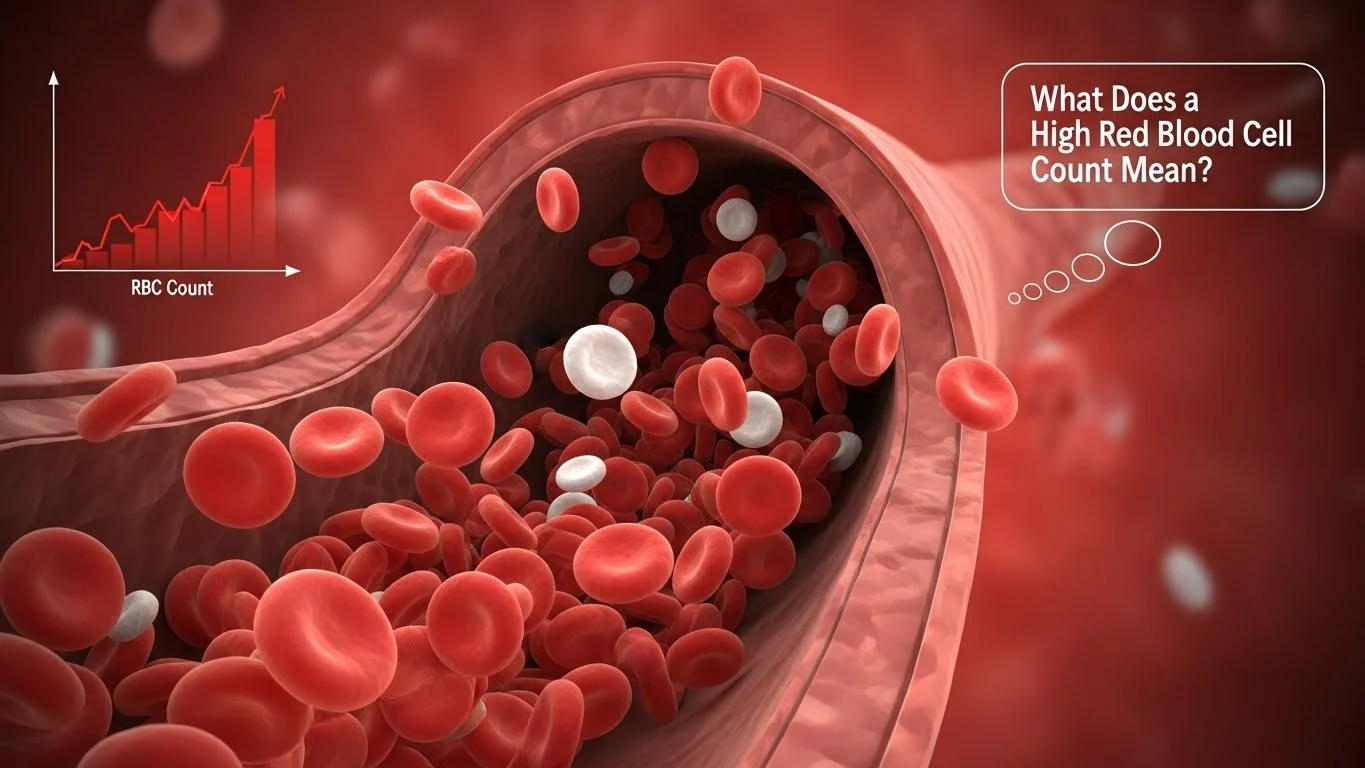
High red blood cell count is a medical term that has gained attention recently as more people undergo routine blood tests and notice unusual results.
Understanding what high red blood cell count means is important because it can indicate underlying health issues or lifestyle factors that need attention.
In simple terms, a high red blood cell count (also called erythrocytosis or polycythemia) means your body has more red blood cells than normal, which can affect how well your blood carries oxygen.
⚡ Quick Answer
A high red blood cell count means there are more red blood cells in your bloodstream than the normal range. This can result from dehydration, medical conditions, or lifestyle factors, and may require monitoring or treatment depending on the cause.
📚 Core Content Sections
In Medical Context
In healthcare, a high red blood cell count usually signals that your blood is thicker than normal. This can happen due to:
- Dehydration – less plasma in the blood makes red blood cells appear higher in number.
- Lung or heart disease – your body may produce more red blood cells to carry extra oxygen.
- Bone marrow disorders – certain conditions can overproduce red blood cells.
- Lifestyle factors – smoking or high-altitude living can trigger more red blood cell production.
Why it matters: Too many red blood cells can increase the risk of blood clots, stroke, or heart attack.
In Texting and Messaging
Unlike common phrases or emojis, high red blood cell count is not used as slang in texting or messaging. If someone mentions it in a text, they are most likely sharing medical results or asking for health advice.
In Love and Relationships
There is no romantic meaning associated with high red blood cell count. Conversations around it in relationships are usually about:
- Supporting a partner’s health concerns
- Sharing lab results for advice or awareness
Example:
“I just got my blood test results. Looks like I have a high red blood cell count. Should I see a doctor?”
In Slang and Casual Language
This term is not commonly used in casual slang. People generally use simpler language like “my blood levels are high” rather than the technical term.
On Social Media Platforms
On platforms like TikTok, Instagram, or Snapchat, high red blood cell count appears mainly in:
- Health awareness posts – explaining test results
- Medical advice clips – how to manage blood health
- Lifestyle content – highlighting factors that affect red blood cells (e.g., exercise, hydration, smoking)
Example caption:
“Ever wondered why your blood test shows high RBC? Here’s what it could mean for your health!”
Spiritual or Symbolic Meaning
High red blood cell count does not have a spiritual meaning. It is purely a physiological measurement.
Numerology or Cultural Meaning
There is no numerology or cultural significance linked to red blood cell count. It is strictly a medical concept.
🧠 Examples & Usage
Example 1 – Medical Text
“My doctor said my red blood cell count is 6.0 million/µL, which is above the normal range. I need to drink more water and follow up in a week.”
Example 2 – Social Media Caption
“High RBC? Don’t panic! Sometimes it’s just dehydration, but get checked to rule out serious issues.”
Key takeaway: Context is crucial—medical discussions are literal, while social media captions simplify the explanation.
❓ Common Questions
1. What does high red blood cell count really mean?
It indicates more red blood cells than normal, which could be due to dehydration, smoking, living at high altitudes, or certain medical conditions.
2. Is it positive or negative?
It can be both. Mild elevation may be harmless, but high levels may increase risk of blood clots and heart problems.
3. Is it romantic?
No, it has no romantic connotation.
4. How should someone reply if told they have a high red blood cell count?
- Ask for context from a healthcare provider
- Offer support if it concerns a loved one
- Suggest lifestyle adjustments if advised
🏁 Conclusion
A high red blood cell count simply means your body has more red blood cells than normal. While it can be harmless in some cases, it may also signal underlying health issues.
By understanding the causes, risks, and context, you can make informed decisions about your health. Now, you can confidently recognize what this term means and why it matters.
